
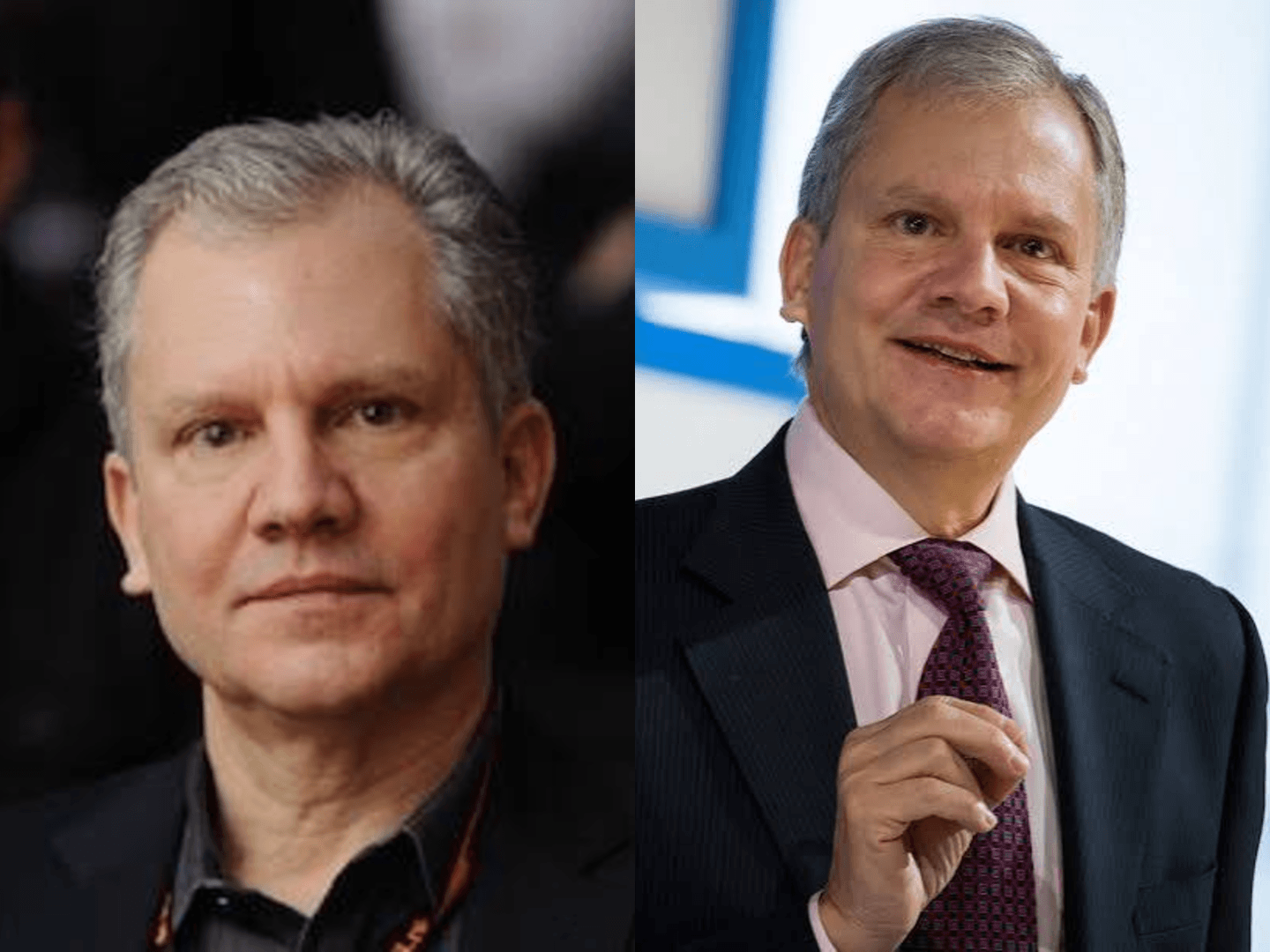
Michael Bloomberg and Arthur Sulzberger Jr. are connected through reported discussions involving The New York Times, although the available evidence does not establish that Bloomberg made a formal purchase offer. Their connection is best understood through Bloomberg’s media influence, Sulzberger’s leadership of the Times, and the Ochs-Sulzberger family’s long-standing control of the newspaper.
Who Is Michael Bloomberg?
Michael Bloomberg is a businessman, philanthropist, and former mayor of New York City who built his fortune through Bloomberg L.P., the financial information and media company he founded in 1981. His career gave him an unusually prominent position across business, politics, philanthropy, and journalism.
Bloomberg began his professional career at Salomon Brothers before founding Innovative Market Systems, the company that became Bloomberg L.P. Its financial terminals transformed access to market information, while Bloomberg News established the company as a significant competitor in the global business media industry.
His political career added another dimension to his public profile. Bloomberg served as New York City’s mayor from 2002 through 2013, winning three consecutive terms and overseeing the city during periods that included the aftermath of the September 11 attacks and the global financial crisis.
Bloomberg’s connection to journalism is therefore deeper than simply owning a major media company. Bloomberg L.P. operates Bloomberg News, while its broader business has made the Bloomberg name synonymous with financial reporting, market data, and international business journalism.
Who Is Arthur Sulzberger Jr.?
Arthur Ochs Sulzberger Jr. belongs to the family that has controlled The New York Times since 1896, when his great-grandfather Adolph S. Ochs acquired the newspaper. Sulzberger joined the Times in 1978 and eventually became one of its most influential modern publishers.
Sulzberger became publisher of The New York Times in 1992, succeeding his father, Arthur Ochs Sulzberger. He later became chairman of The New York Times Company in 1997, giving him major responsibility for both the newspaper and its corporate direction.
His tenure coincided with one of the most consequential periods in newspaper history. The Times faced the rise of online journalism, declining traditional newspaper advertising, changing reader habits, and increasing competition from digital publications and emerging technology platforms.
Sulzberger’s leadership also included the expansion of the Times’ digital operation. The newspaper increasingly shifted toward subscription-based digital journalism, a transformation that became central to its long-term business strategy and helped distinguish the Times from many struggling traditional newspapers.
The Ochs-Sulzberger Family and The New York Times
Understanding Bloomberg’s reported connection with Sulzberger requires understanding how ownership of The New York Times works. The newspaper is part of The New York Times Company, which has a dual-class share structure that gives the Ochs-Sulzberger family significant voting control.
The family does not simply maintain influence through a large collection of ordinary publicly traded shares. Class B shares carry the voting power that allows the family-controlled trust to maintain substantial authority over corporate decisions, including matters affecting control of the company.
The structure reflects a deliberate effort to preserve family influence over the newspaper. The company’s filings describe arrangements designed to retain the family’s control while protecting the newspaper’s continued independence and journalistic mission.
That structure is important when examining reports about Bloomberg. A hypothetical Bloomberg acquisition would not have been comparable to buying a conventional publicly traded media company where an investor could potentially accumulate enough shares to obtain control through the market.Since your article covers both Michael Bloomberg and Arthur Sulzberger Jr., the clearest approach is a side-by-side quick bio table. I’ve marked information that is not reliably documented rather than filling gaps with estimates.
| Field | Michael Bloomberg | Arthur Ochs Sulzberger Jr. |
|---|---|---|
| Full name | Michael Rubens Bloomberg | Arthur Ochs Sulzberger Jr. |
| Age | 84 (born February 14, 1942) | 74 (born September 22, 1951) |
| Birthplace | Boston, Massachusetts, U.S. | Mount Kisco, New York, U.S. |
| Nationality | American | American |
| Profession | Businessman, media executive, philanthropist, politician | Journalist, newspaper publisher, media executive |
| Height | Not reliably verified by an authoritative source | Not reliably verified by an authoritative source |
| Education | Johns Hopkins University, B.S.; Harvard Business School, MBA, 1966 | Tufts University, B.A. in political science, 1974; Harvard Business School Program for Management Development |
| Years active | 1966–present | 1974–present |
| Notable work | Founded Bloomberg L.P.; served as New York City mayor from 2002–2013 | Publisher of The New York Times, 1992–2018; chairman of The New York Times Company, 1997–2020 |
| Awards & honors | Numerous honorary degrees and civic honors | National Book Award Literarian Award, 2012; CUNY School of Journalism Journalistic Achievement Award, 2017 |
| Net worth | Estimated at about $109.4 billion as of March 2026, according to Forbes-reported figures | No reliable public estimate found |
| Spouse/partner | Diana Taylor, longtime partner | Julie O’Connor; married in 2025, following earlier marriages to Gail Gregg and Gabrielle Greene |
| Social media | Official profiles are maintained under the Bloomberg name, including LinkedIn | No major verified personal social-media presence reliably established |
Bloomberg’s education and career information is confirmed by Harvard Business School and his official biography. Sulzberger’s education, career history, birth information, and honors are documented by Columbia University’s journalism case study and other institutional records.
For current wealth, the figure should be treated as an estimate rather than a fixed fact, because billionaire net worth changes with asset valuations. Forbes’ current profile is the more appropriate reference for Bloomberg’s wealth than older biographical estimates.
Sulzberger’s current marital status is based on reporting from December 2025, which reported his marriage to Julie O’Connor.
Michael Bloomberg and Arthur Sulzberger Jr. Connection
The connection between Michael Bloomberg and Arthur Sulzberger Jr. became particularly notable because of reports that Bloomberg and Sulzberger discussed the possibility of Bloomberg acquiring The New York Times. The existence of reported discussions is supported by later interviews and reporting, but the details require careful qualification.
Sulzberger discussed the subject in a 2020 interview with The Guardian conducted after his retirement as publisher. The interview examined his career, the Times’ ownership, and longstanding questions about potential buyers of the newspaper.
Those reports are significant because they show that Bloomberg was not merely a name casually mentioned by outsiders. His potential involvement with the Times was sufficiently credible to become part of serious media-industry discussion surrounding the newspaper.
However, there is an important distinction between discussing a possible acquisition and making a formal bid. The available authoritative evidence does not establish that Bloomberg submitted a documented purchase offer with a confirmed price, nor does it establish that Sulzberger formally rejected such an offer.
Was Michael Bloomberg Trying to Buy The New York Times?
The safest conclusion is that Bloomberg had reported interest in the Times and that discussions involving Sulzberger occurred, but the evidence does not justify describing the episode as a completed acquisition attempt. Claims about a formal offer require documentation that has not been established by authoritative sources.
This distinction matters because media stories about prominent newspapers can easily turn exploratory conversations into narratives about failed deals. In Bloomberg’s case, the public record supports the existence of interest and discussion more clearly than it supports claims about specific financial terms or a formal transaction.
The Times also had reasons to attract interest from a figure such as Bloomberg. It was one of America’s most prestigious newspapers, possessed a globally recognized brand, and occupied a distinctive position in American political and cultural life.
Bloomberg already had extensive experience operating a major news organization through Bloomberg News. A potential relationship with the Times therefore would have represented a significant concentration of media influence, particularly in New York, where Bloomberg had already served as mayor.
Why Bloomberg Would Have Been a Significant Potential Buyer
Bloomberg and the Times represented different approaches to journalism. Bloomberg L.P. built its media identity around financial information, business reporting, speed, and data, while The New York Times developed a broader editorial operation covering politics, international affairs, culture, science, business, and investigative journalism.
The contrast makes the reported Bloomberg interest particularly noteworthy. Bloomberg had demonstrated that he could build a highly successful media business, while the Times had spent decades developing one of the world’s most recognizable newspaper brands.
Bloomberg’s political background would also have made any potential acquisition especially sensitive. As a former New York mayor and major political donor, his ownership of a newspaper with enormous political influence would inevitably have raised questions about editorial independence and conflicts of interest.
Those concerns are different from ordinary corporate considerations. Newspapers exercise influence not only through revenue and market share but through the information they publish, the investigations they pursue, and the political conversations they help shape.
Why the Times Was Not an Ordinary Media Asset
The history of The New York Times made questions of independence particularly important to the Sulzberger family. Since Adolph Ochs acquired the newspaper in 1896, the family has emphasized maintaining the institution as an independent newspaper rather than treating it solely as a conventional commercial property.
The company’s corporate structure reinforces that philosophy. The family-controlled voting arrangement gives the Ochs-Sulzberger interests substantial influence even though the company is publicly traded, allowing family control to continue across generations.
This arrangement can be compared with media companies controlled primarily by outside investors. At a conventional public company, shareholders may focus heavily on financial returns, while the Times’ ownership structure gives the family an additional mechanism for protecting its long-term institutional objectives.
That does not mean the Times operates outside normal commercial pressures. The company remains publicly traded and competes for subscribers, advertisers, readers, journalists, and digital audiences. Its unusual ownership structure instead provides the family with greater influence over strategic control.
Arthur Sulzberger Jr.’s Position as Publisher
Sulzberger’s role helps explain why conversations about a possible buyer attracted attention. As publisher, he was responsible for a newspaper whose editorial reputation depended heavily on its independence from outside political and commercial interests.
His tenure also coincided with a major transformation in journalism. Traditional print advertising declined as audiences moved online, forcing newspapers to reconsider how they funded professional reporting and how they competed with free digital content.
The Times responded by investing heavily in digital journalism and developing a subscription model. Under Sulzberger’s leadership, the organization increasingly treated digital subscriptions as a central component of its future rather than relying primarily on print circulation and advertising.
That transformation became one of the defining features of the Times during Sulzberger’s years as publisher. His legacy therefore extends beyond ownership questions and includes the strategic transition of one of America’s most important newspapers into a digital media company.
Bloomberg’s Relationship With New York Media
Bloomberg’s relationship with New York’s media landscape was already substantial before any reported discussions concerning the Times. Bloomberg L.P. had become a major financial news organization, while Bloomberg himself had become one of the city’s most recognizable political figures.
His mayoralty gave him an additional connection to the Times and other New York news organizations. City government is a major source of reporting for metropolitan newspapers, meaning Bloomberg routinely occupied the position of both newsmaker and powerful media subject.
That relationship was fundamentally different from Sulzberger’s. Bloomberg was an executive and political figure whose career generated news, while Sulzberger was a newspaper publisher responsible for overseeing an organization that reported on powerful figures such as Bloomberg.
The possibility of Bloomberg becoming the owner of the Times would therefore have reversed an important part of that relationship. A politician and media subject could potentially have become the proprietor of an institution that regularly scrutinized political power.
What Can Actually Be Verified?
The strongest evidence supports several basic facts. Bloomberg founded Bloomberg L.P., served as New York City’s mayor, and became a major figure in international business media. Sulzberger served as Times publisher from 1992 to 2018 and later remained chairman of The New York Times Company.
It is also established that the Ochs-Sulzberger family retains significant voting control through the company’s Class B shares. The family’s ownership structure has been documented in The New York Times Company’s filings with the U.S. Securities and Exchange Commission.
Reliable reporting also establishes that Bloomberg’s possible acquisition of the Times was discussed publicly. Sulzberger himself addressed questions surrounding potential buyers in interviews, making the subject more than an unsupported internet rumor.
What remains unverified is equally important. There is no authoritative evidence presented here establishing a specific Bloomberg purchase price, a signed agreement, a formal written bid, or an agreement in principle between Bloomberg and Sulzberger.
What Happened to the Potential Acquisition?
Bloomberg did not become the owner of The New York Times. The Ochs-Sulzberger family’s controlling position remained intact, and the Times continued operating under the ownership structure that had allowed the family to retain control for generations.
Sulzberger eventually stepped down as publisher in 2018, when his son, A. G. Sulzberger, became publisher. Arthur Sulzberger Jr. subsequently stepped away from his chairman role, completing a generational transition within the company.
That transition illustrates the difference between the reported Bloomberg discussions and an actual change in ownership. The newspaper remained within the Ochs-Sulzberger family rather than passing to Bloomberg or another outside billionaire.
Bloomberg likewise continued building his own media and philanthropic empire rather than taking control of the Times. The two men consequently remained associated primarily through the history of New York’s business, political, and media institutions.
Why the Bloomberg-Sulzberger Story Still Matters
The story remains relevant because it illustrates the unusual intersection of money, journalism, politics, and institutional ownership in American media. Bloomberg represented enormous financial and political influence, while Sulzberger represented a family tradition built around independent newspaper ownership.
Their reported discussions also highlight why ownership questions surrounding major news organizations attract extraordinary attention. Buying a newspaper such as the Times is not simply a commercial transaction because ownership can influence perceptions of editorial independence and public trust.
The episode is also useful for understanding the distinction between Bloomberg’s media model and the Times’ model. Bloomberg built a global information business from financial data and professional subscriptions, while the Times evolved from a traditional newspaper into a diversified digital subscription company.
Ultimately, the most defensible account is narrower than some versions of the story suggest. Michael Bloomberg and Arthur Sulzberger Jr. were connected through reported discussions concerning The New York Times, but the available evidence does not establish that Bloomberg made a formal purchase offer or came close to acquiring the newspaper.
That distinction is essential when separating documented history from speculation. Bloomberg’s interest was noteworthy because of his wealth, political background, and experience in media, while Sulzberger’s position was significant because his family controlled the Times through a structure specifically designed to preserve long-term influence and independence.FAQs
Who are Michael Bloomberg and Arthur Sulzberger Jr.?
Michael Bloomberg is the founder of Bloomberg L.P. and a former New York City mayor. Arthur Ochs Sulzberger Jr. was publisher of The New York Times from 1992 to 2018 and a leading member of the family that has controlled the newspaper since 1896.
Did Michael Bloomberg try to buy The New York Times?
Bloomberg was reportedly interested in acquiring The New York Times, and discussions involving Bloomberg and Sulzberger were reported. However, available authoritative evidence does not establish that Bloomberg made a formal purchase offer or submitted a confirmed bid.
Did Arthur Sulzberger Jr. sell The New York Times to Bloomberg?
No. Arthur Sulzberger Jr. did not sell The New York Times to Bloomberg. The Ochs-Sulzberger family retained its controlling position, and the newspaper remained under the family’s ownership structure.
Why was Bloomberg considered a potential buyer of The New York Times?
Bloomberg was already a major media entrepreneur through Bloomberg L.P. and Bloomberg News, while his wealth and prominence made him capable of pursuing a major media acquisition. His political background also made the possibility particularly noteworthy.
Who controls The New York Times today?
The Ochs-Sulzberger family continues to exercise substantial voting control through the company’s Class B shares and family-controlled trusts. A. G. Sulzberger, Arthur Sulzberger Jr.’s son, became publisher in 2018.
