
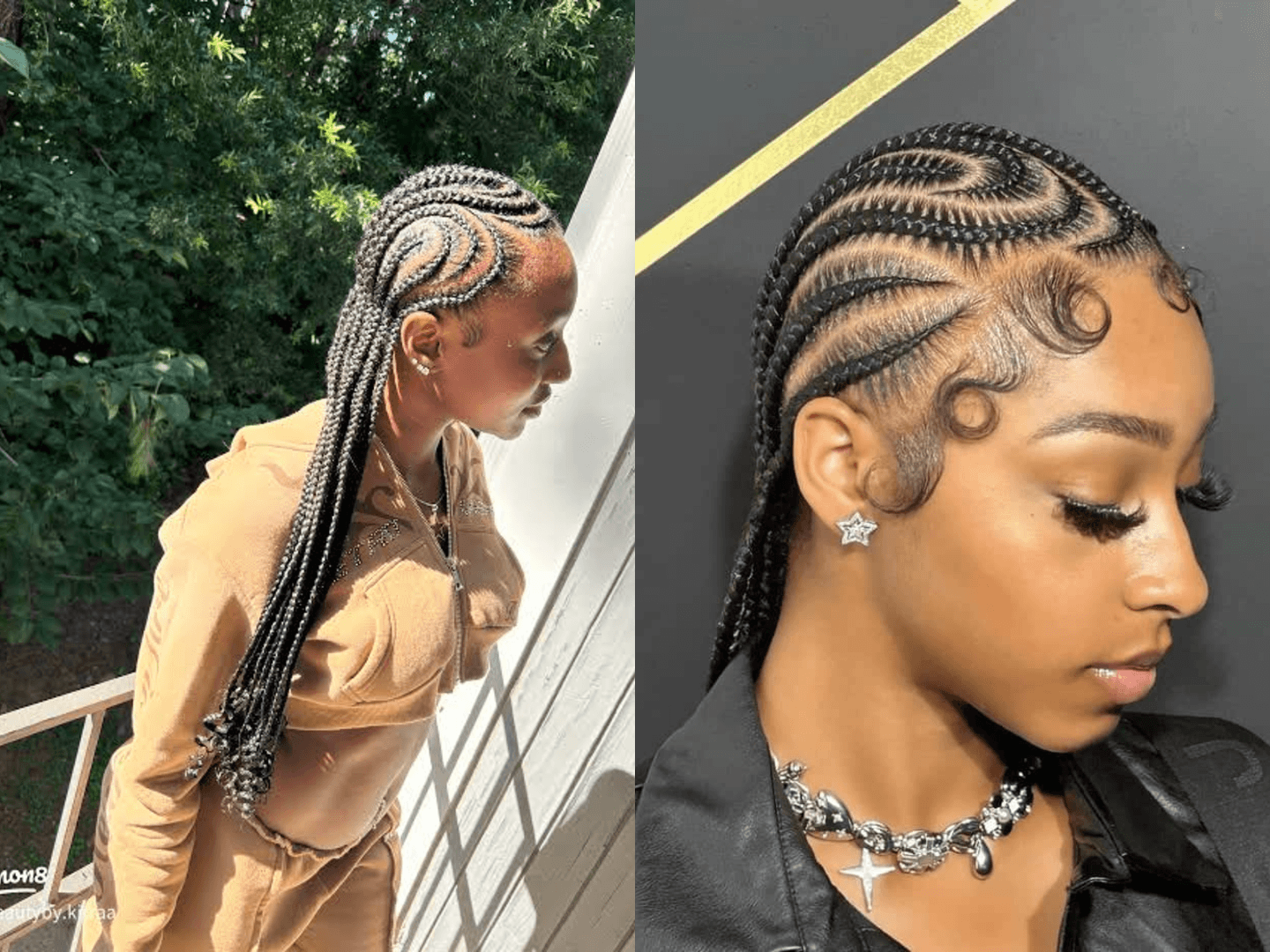
Alicia Keys braids are a signature protective style rooted in Fulani braiding traditions, which the singer popularized beginning with her 2001 debut. The look has evolved over two decades into a broader aesthetic featuring geometric cornrows, sculptural updos, and modern textural contrasts. Keys has consistently worn braids on red carpets, on television, and in her music, cementing their place in contemporary beauty culture.
The Fulani Foundation
The style most closely associated with Keys in her early years is Fulani braids. These feature cornrows at the front of the head that transition into individual box braids at the back . Upon her debut with the single “Fallin” in 2001, Keys appeared with slender Fulani braids, often adorned with colorful beads . The look became so widely imitated that fans began requesting the style by her name.
Fulani braids carry historical significance beyond celebrity trends. The style originates from the Fula people, a community in North Africa’s Sahel zone and West Africa, where braid patterns traditionally signaled marital status, religion, wealth, or regional origins . Keys has spoken about this cultural weight, telling Glamour UK in 2020 that she read a book about how hair styles communicated a person’s position within different tribes .
Alicia Keys’s Personal Connection
Keys has described her relationship with braids in terms of heritage and identity. In the same 2020 interview, she said, “I’ve always felt royal when I wear braids. There’s something so beautiful about the Blackness of it, about my African ancestry that I just feel truly connected to” . This statement has been widely cited by publications including People and Essence, underscoring how her style choices are tied to a broader cultural narrative .
Her hairstylist Nai’vasha Johnson told Hollywood Life in 2020 that braids are “a reflection of who she is,” noting that Keys has been associated with braided styles since her career began . That consistency has made her a reference point for protective styling in mainstream entertainment.
A few notes on the data: Keys’s exact height has varied across sources, with Wikidata listing approximately 168 cm. Net worth figures for celebrities are estimates and should be treated as reported rather than official financial disclosures. Her Grammy win count is listed as 17 by Universal Music Publishing Group, though some earlier sources cite 16, reflecting awards received through 2025.
Evolution of the Look
While Fulani braids remain the foundation, Keys’s braided aesthetic has expanded considerably. InStyle noted in 2026 that her modern styles blend curved cornrows, boho texture, and sleek twist details, moving beyond a single technique into experimentation with pattern and structure . This evolution includes braided top buns, criss-cross cornrows, halo braids, and bubble braids secured with zip ties .
Certain moments mark this progression. At the 2019 Grammy Awards, where she served as host, Keys wore plaits adorned with crystals, a modernized nod to her early beaded looks . For the 2024 Tony Awards, she wore a high bun with two side braids that referenced her trademark shape in a formal context . Her 2020 self-titled album ALICIA featured her on the cover with neat cornrows and sculpted baby hairs, a stripped-back iteration of the style she helped popularize .
Practical Considerations for the Style
For those seeking to replicate the look, Fulani braids involve a significant time and financial commitment. Allure reported in 2024 that a salon appointment typically runs between four and seven hours, with costs ranging from $200 to $800 depending on braid size and cornrow intricacy . With proper care, the style can last up to six weeks .
The installation process differs from other protective styles. Unlike box braids, which begin with individual sections throughout the head, Fulani braids start with a cornrow base before transitioning to loose braids or twists at the back . This hybrid structure is what gives the style its distinctive visual contrast.
Cultural Recognition and Legacy
The phrase “Alicia Keys braids” has entered common parlance among fans and beauty communities. MadameNoire reported in 2026 that fans coined the catchphrase in her honor, which Keys acknowledged in a 2025 TikTok video . InStyle has referred to her as the “queen of braids,” citing her consistent reinvention of the style across decades .
Keys’s influence extends beyond music. Her tenure as a coach on The Voice and her hosting duties at the Grammys placed her braided looks in front of mass audiences repeatedly . Each appearance reinforced the association between her name and the style, even as the specific technique shifted from beaded Fulani braids to sculptural updos and sleek twists.
What distinguishes Keys’s approach from a simple trend is its longevity. While many celebrities adopt protective styles for a season or a single red carpet, Keys has maintained braids as a constant presence since 2001 . That consistency, combined with her willingness to adapt the look, has made “Alicia Keys braids” a lasting reference rather than a fleeting moment.
What exactly are “Alicia Keys braids”?
They are a protective style rooted in Fulani braids, which feature cornrows at the front transitioning into individual box braids or twists at the back . Alicia Keys popularized the look starting with her 2001 debut, and it has since evolved to include geometric patterns, sculptural updos, and modern variations .
How long do Fulani-style braids last?
With proper care, a set typically lasts up to six weeks . Some stylists suggest they can last between six to eight weeks depending on maintenance and hair growth . Sleeping with a satin bonnet or silk scarf helps prolong the style and reduce frizz .
How much do they cost and how long does installation take?
Expect to spend between $200 and $800 and four to seven hours in the salon, depending on braid size and cornrow intricacy . The wide range reflects factors like stylist experience, location, and whether accessories like beads are included .
What did Alicia Keys say about wearing braids?
Keys told Glamour UK in 2020 that she has “always felt royal” when wearing braids, describing them as a connection to her African ancestry . She also said she learned how braid styles historically communicated a person’s position within different tribes .
How do Fulani braids differ from box braids?
Fulani braids combine cornrows on the scalp with individual braids at the back, creating a distinct patterned front and loose back . Traditional box braids consist of individual braids from root to tip, parted in square or triangular sections across the entire head .
