
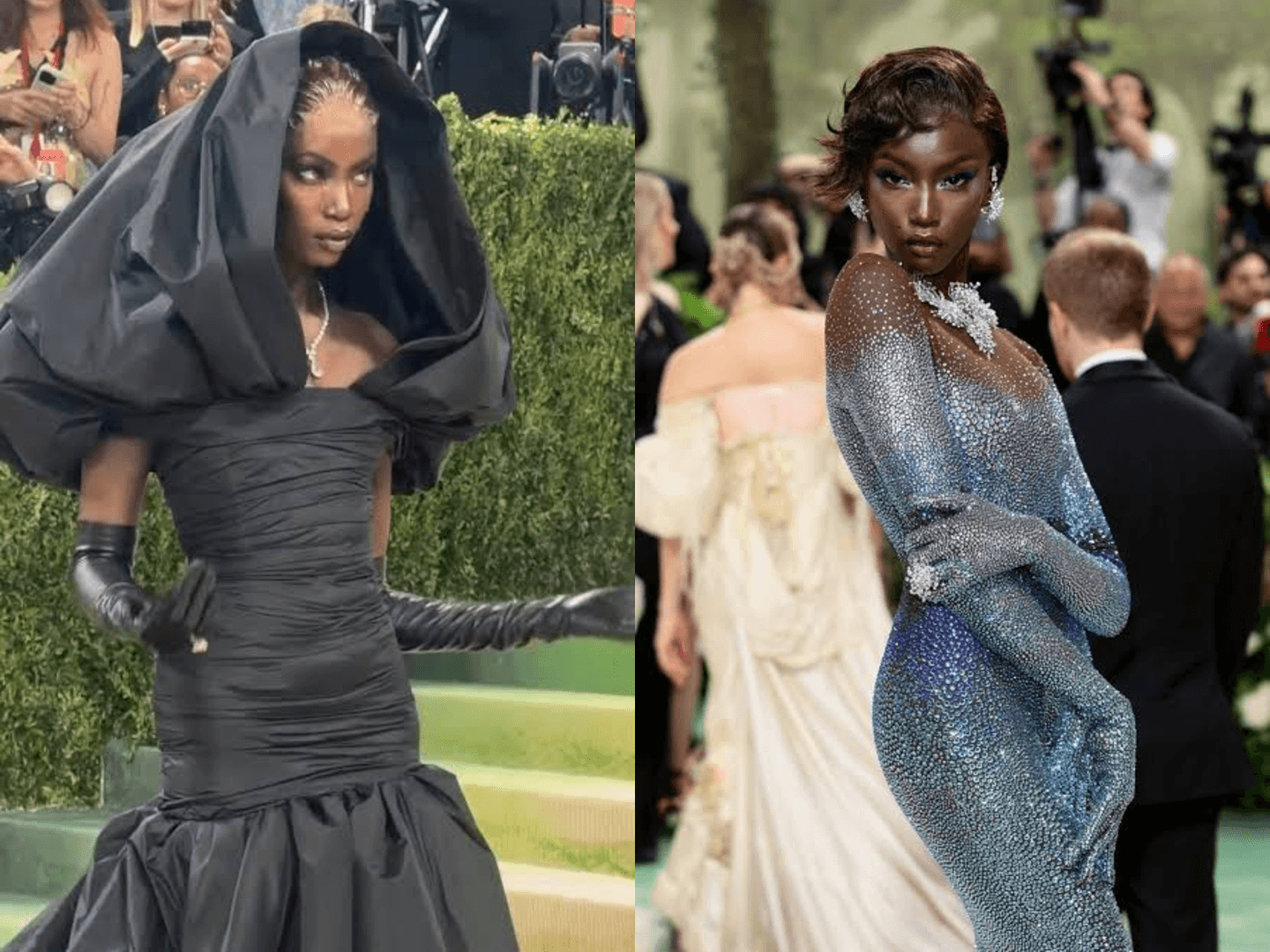
Anok Yai turned the 2026 Met Gala red carpet into a gallery floor by becoming a living sculpture. The Sudanese-American model collaborated with Balenciaga creative director Pierpaolo Piccioli on a Black Madonna concept, complete with prosthetic hair, bronze body paint, and a sculptural black gown. Her goal was explicit: to send a message of hope through art rather than conventional glamour .
The Theme That Sparked a Statue
The 2026 Met Gala theme was “Costume Art,” with a dress code of “Fashion is Art” . When Anok Yai learned of the theme, her first instinct was immediate and unconventional. She wanted to be a statue. She reached out to Pierpaolo Piccioli, who had recently taken the helm at Balenciaga, and asked to collaborate. According to Vogue, she “begged” him, and he agreed . Together they settled on the Black Madonna, a figure found in religious art across Europe, as the conceptual anchor for the look .
A Message Beyond Fashion
For Yai, the reference was never purely aesthetic. She framed the Black Madonna as a symbol of hope in a difficult political moment. Speaking to Vogue from the hair and makeup chair on Met Gala day, she explained her reasoning directly. “In the climate that we’re living in right now, we need hope,” she said. “I feel like being the Black Madonna in a Trump world is going to send that message” . This intent distinguished her approach from celebrities who treated the theme as a purely visual exercise. Geo.tv later included her among five celebrities who “actually understood the assignment,” noting that she delivered “one of the night’s most striking interpretations” .
The Prosthetic Transformation
The physical execution required Yai to abandon any desire to look like herself. Her stated goal was to appear as a “walking statue” rather than a human being . The centerpiece was a prosthetic wig made of encapsulated silicone, fully glued to her head by a team including prosthetic artist Malina Stearns . The hair was sculpted by Sarah Glasser, who drew inspiration from Michel Anguier’s sculpture “Leda and the Swan,” which she had coincidentally seen at the Metropolitan Museum of Art . Makeup artist Sheika Daley airbrushed Yai’s skin with copper-gold body paint, and artificial tears were applied to her cheeks, reinforcing the mourning iconography of the Mater Dolorosa .Quick Bio: Anok Yai
| Field | Information |
|---|---|
| Full Name | Anok Yai |
| Age | 28 (born December 20, 1997) |
| Birthplace | Cairo, Egypt |
| Nationality | South Sudanese-American |
| Profession | Fashion model |
| Height | 5’10” (178 cm) |
| Education | Attended Plymouth State University (studied biochemistry); graduated from Manchester High School West |
| Years Active | 2017–present |
| Notable Works | Opened Prada show (first Sudanese model to do so); Vogue covers (American, British, Italian, and others); campaigns for Estée Lauder, Tiffany & Co., Versace |
| Awards | Model of the Year, Fashion Awards 2025 (British Fashion Council); models.com Model of the Year (Industry’s Vote and Reader’s Choice), 2023 |
| Net Worth | Reported as $5 million (Celebrity Net Worth, 2026) and $9 million (Daily Tribune, 2025); figures are estimates and vary by source |
| Spouse/Partner | No publicly confirmed relationship |
| Social Media | Instagram: @anokyai (approximately 3.3 million followers) |
Notes on sourcing: Age, birthplace, and height are consistent across multiple sources. Net worth figures conflict between outlets and should be treated as unverified estimates. Education details are drawn from Wikipedia’s cited biography. Social media follower count reflects reporting from late 2025.
The Gown and Its Scale
The custom Balenciaga couture gown was a substantial undertaking. Vanity Fair reported that the dress required 15 people working around the clock for a week to construct . Stylist Carlos Nazario described the train as “about five or six meters” long, taller than Yai herself, designed for a dramatic entrance . The final silhouette included an oversized hood, black ruched detailing, and black leather gloves . Vogue Hong Kong noted that the sculptural shape referenced Spanish religious iconography, aligning with both the “Costume Art” exhibition and Yai’s Black Madonna vision . Some sources described the fabric as silk taffeta rooted in a 1949 Balenciaga technique, though this detail appeared primarily in one outlet and was not widely corroborated .
Seven Met Galas and a Shift in Approach
The 2026 Met Gala marked Yai’s seventh appearance at the event, which she called her “lucky number seven” . She admitted to being “extremely nervous” precisely because the look was so far removed from her usual red carpet presence. “This is the first Met where I’ve done something crazy that I don’t think anyone will do,” she told Vanity Fair. “No one’s going to show up in another prosthetic wig, right?” . The nerves were compounded by the physical demands of the prosthetics, which she described as “hot and messy,” though she embraced the collaboration with her team as essential to the result .
The Context of Resilience
The appearance carried weight beyond the carpet. Earlier in 2026, Yai was named to the Time 100 list of most influential people . She had also been named Model of the Year at the Fashion Awards in late 2025 . During that same period, she revealed a “silent battle” with a congenital defect affecting her lungs and underwent robotic surgery . Against that backdrop, her decision to appear as a mourning, divine figure rather than a conventional glamour subject read as a deliberate statement. EasternEye noted that the look brought together “fashion, symbolism and personal narrative,” extending the Met exhibition’s exploration of clothing and the body into questions of identity and representation .
Comparison and Contrast
The 2026 Met Gala saw other attendees use prosthetics, including Heidi Klum and Bad Bunny. However, Vanity Fair noted that Yai wore the evening’s only silicone-based hair prosthetic . The comparison sharpens what made her look distinctive. Where other prosthetics served as costume elements, Yai’s transformation aimed at something more conceptual. She did not want to be recognized as a celebrity on the carpet. She wanted to be encountered as an artwork. The prosthetic was not an accessory. It was the medium through which the Black Madonna concept became legible.
What the Look Achieved
The final result was a rare instance of a Met Gala look that functioned on multiple levels simultaneously. It honored the “Fashion is Art” dress code by treating the body as sculptural material. It carried a specific political and spiritual message that Yai articulated clearly in interviews. And it represented a personal departure for a model who, by her own admission, usually “pulls up looking sexy” . The look entered Met Gala beauty history not because it was the most expensive or the most elaborate, but because it was the most fully realized. Yai did not simply attend the Met Gala. She used it as a platform to say something, and she said it without speaking a word.
What was the concept behind Anok Yai’s 2026 Met Gala look?
Anok Yai chose the Black Madonna as her concept for the 2026 Met Gala, aiming to present herself as a living sculpture rather than a traditional celebrity. She approached Balenciaga creative director Pierpaolo Piccioli to collaborate, telling Vogue she wanted to “send a message” of hope, stating: “I feel like being the Black Madonna in a Trump world is going to send that message”.
How did Anok Yai physically transform into a statue?
Yai’s transformation relied on prosthetics and body paint. She wore an encapsulated silicone prosthetic wig that was fully glued to her head, sculpted by Sarah Glasser, who drew inspiration from Michel Anguier’s sculpture “Leda and the Swan” at the Metropolitan Museum of Art. Makeup artist Sheika Daley airbrushed her skin with copper-gold body paint, and artificial tears were applied to her cheeks to complete the statue-like effect.
What did Anok Yai’s Balenciaga gown look like and how was it made?
The custom Balenciaga couture gown featured an oversized hood, black ruched detailing, and black leather gloves. According to Vanity Fair, the dress required 15 people working around the clock for a week to construct. Stylist Carlos Nazario described the train as approximately “five or six meters” long, designed for a dramatic entrance.
Why was this Met Gala appearance personally significant for Anok Yai?
The 2026 Met Gala was Yai’s seventh appearance at the event. It came after she was named to the Time 100 list and won Model of the Year at the Fashion Awards in late 2025. During that same period, she revealed a “silent battle” with a congenital defect affecting her lungs and underwent robotic surgery. She told Vanity Fair she was “extremely nervous” because the look was so different from anything she had done before.
