
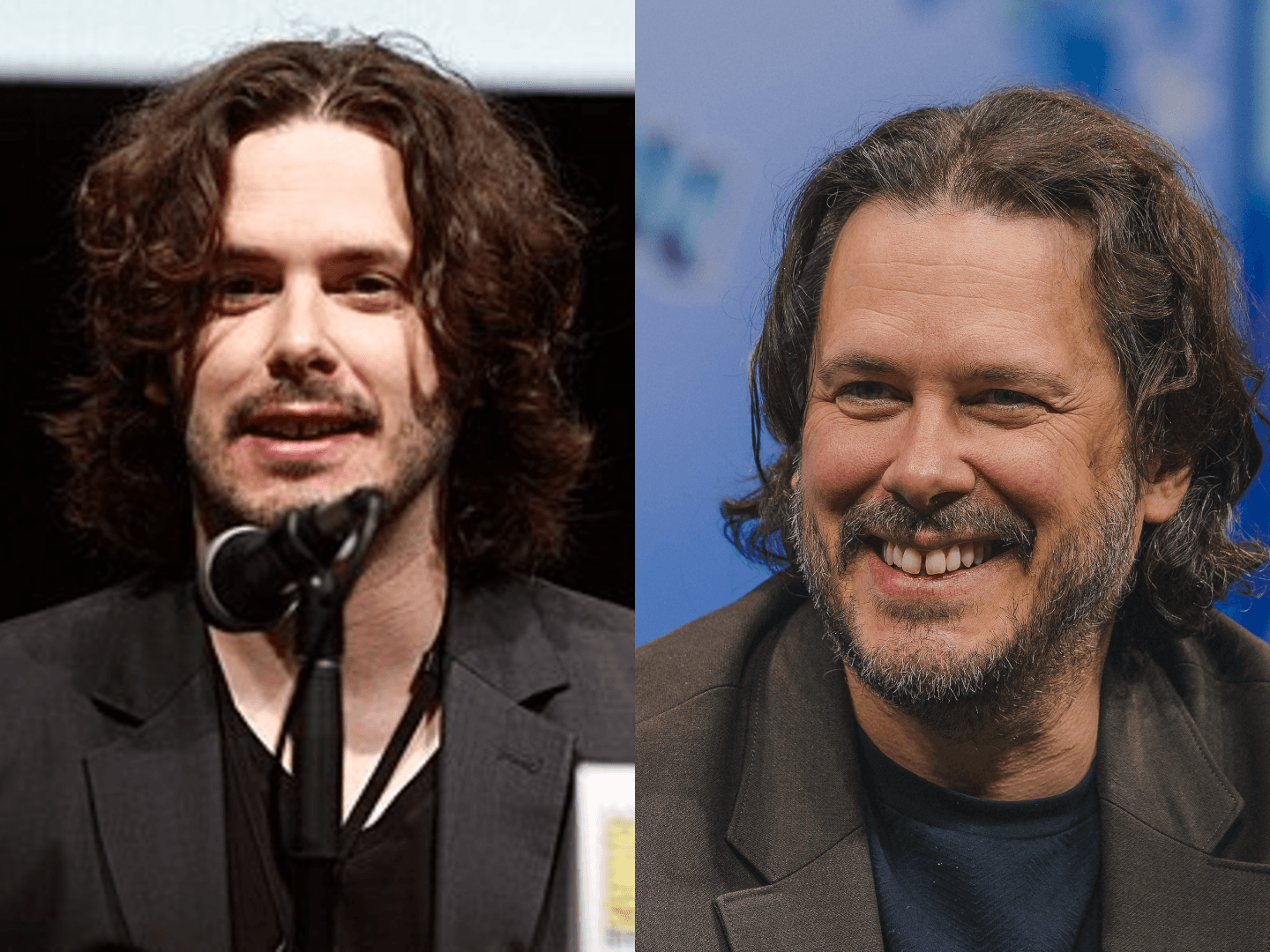
Edgar Wright’s filmography spans three decades and includes nine feature films as director, from a low-budget Western parody to major studio releases. The English filmmaker, born on April 18, 1974, has built a career defined by kinetic visual style, genre synthesis, and lasting creative partnerships . His body of work reveals a consistent evolution while maintaining a distinctive comedic voice.
Wright’s directorial debut came with A Fistful of Fingers in 1995, a Spaghetti Western parody made on a minimal budget . The film established his instinct for genre play, though it reached limited audiences. Before features, he directed the comedy series Asylum and Mash and Peas in 1996, early work that preceded his television breakthrough .
The sitcom Spaced, which Wright created and directed from 1999 to 2001, proved transformative . Starring Simon Pegg and Nick Frost, the Channel 4 series debuted in September 1999 and ran for two seasons . It forged the creative partnership that would define his film career and showcased his emerging visual style, including his facility for genre parody and directing comic performers .
Shaun of the Dead arrived in 2004 as a zombie romantic comedy, a genre the filmmakers themselves called a “rom-zom-com” . Wright has said the initial title was “Teatime of the Dead” and that the concept grew from his shared obsession with George A. Romero’s Dawn of the Dead alongside Pegg . The film begins with Shaun visiting his local corner shop in an unbroken tracking shot, a technique Wright would revisit .
Wright described the film’s approach as distinctly British. “If Dawn of the Dead is happening in Pittsburgh, this is what’s happening in North London,” he said, noting the film focuses on ordinary people rather than scientists or military figures . Hot Fuzz followed in 2007, a buddy-cop action comedy set in Wright’s hometown . The film drew from his observations of local police culture and was designed to fill a gap in British cinema .
The Three Flavours Cornetto trilogy emerged as a connected series, though each film stands alone . The connection involves Cornetto ice cream appearing in each film, with different flavors corresponding to genres: strawberry for Shaun of the Dead, blue original for Hot Fuzz, and mint chocolate chip for the final installment . The World’s End, released in 2013, completed the trilogy as a science fiction comedy about a pub crawl gone wrong .
Wright explained the science fiction element as an expression of feeling alienated from one’s hometown . He noted that the film explores the dangers of nostalgia and the tension between accepting change and clinging to the past . The trilogy maintains consistent collaborators including Pegg, Frost, and producer Nira Park, who has worked with Wright across multiple projects .
Between the Cornetto films, Wright directed Scott Pilgrim vs. the World in 2010, an adaptation of Bryan Lee O’Malley’s graphic novels . The film incorporated visual techniques from comics and video games, reflecting its source material . It opened at number five and was initially considered a box office disappointment, but became a cult favorite within months .
Wright received a memorable email from Universal’s head of marketing after the opening weekend. The message contained three words: “Years, not days” . He has since said that the three-day weekend is not the end of the story for any movie, noting that many classic films were not hits in their time . By the end of 2010, Scott Pilgrim had already become a midnight movie at Quentin Tarantino’s New Beverly cinema .
Baby Driver, released in 2017, represented a new direction as a music-driven heist thriller . Wright conceived the opening car chase while listening to the Jon Spencer Blues Explosion song “Bellbottoms” late at night in his flat . He brought on choreographer Ryan Heffington, known for Sia’s “Chandelier” music video, to synchronize actors’ movements with the soundtrack .
The production required unusual precision. Wright created animated storyboards cut to the music before filming, and on set Heffington would call out counts like “5, 6, 7, 8!” as actors moved in rhythm . Wright explained that unlike a music video, the film required coverage while maintaining synchronization, with Ansel Elgort often listening to playback through an earpiece during dialogue scenes .
The Sparks Brothers, a documentary about the band Sparks, was released in 2021 alongside Last Night in Soho . Wright conducted approximately 80 interviews for the documentary, a project he had discussed for years before director Phil Lord encouraged him to make it himself at a Sparks concert in October 2017 . The title for Last Night in Soho came from Quentin Tarantino, who played Wright the song by Dave Dee, Dozy, Beaky, Mick & Tich and called it “the best title music for a film that’s never been made” .
Wright’s next feature, The Running Man, adapted from Stephen King’s novel, was scheduled for release in 2025 . The director cast Glen Powell in the lead role, citing his everyman quality and the character’s status as an ordinary person rather than a trained killer . Wright noted that the original novel, written decades ago, anticipated reality television’s manipulation of contestants and audiences .
Across his career, Wright has developed a recognizable visual language. His techniques include unbroken tracking shots, whip pans, frenetic editing, and creative framing that adds meaning to compositions . He makes consistently inventive use of pre-existing music, with rock and pop songs working to enhance storytelling rather than merely accompany scenes . He has received 20 awards and 70 nominations according to IMDb records .
The filmmaker’s work demonstrates a coherent artistic project despite spanning genres. Shaun of the Dead merges horror and romantic comedy. Hot Fuzz blends action and small-town satire. The World’s End combines science fiction with midlife crisis drama. Baby Driver fuses heist thriller with musical choreography. Each film honors its genre conventions while subverting them through character-driven comedy.
Wright’s filmography reflects sustained creative relationships and a commitment to visual invention. From Spaced through the Cornetto trilogy to The Running Man, he has maintained a distinctive voice while evolving his craft. His films reward repeated viewing, revealing layers of technique and meaning beneath their entertaining surfaces.
How many feature films has Edgar Wright directed?
Wright has directed nine feature films to date, from his 1995 debut A Fistful of Fingers through to The Running Man in 2025 . His filmography also includes Shaun of the Dead, Hot Fuzz, Scott Pilgrim vs. the World, The World’s End, Baby Driver, The Sparks Brothers, and Last Night in Soho .
What is the Three Flavours Cornetto trilogy?
The Three Flavours Cornetto trilogy is a series of three British genre comedies directed by Edgar Wright and co-written with Simon Pegg: Shaun of the Dead (2004), Hot Fuzz (2007), and The World’s End (2013) . Each film parodies a different genre — zombie horror, buddy-cop action, and science fiction — and features a Cornetto ice cream in a different flavor as a visual reference .
Where did the Cornetto idea originate?
The Cornetto in Shaun of the Dead was added as a hangover cure for Nick Frost’s character, based on Wright’s own experiences . After receiving free Cornetto ice creams at the film’s wrap party, Wright and Pegg decided to include one in Hot Fuzz as well, and the joke evolved into naming the trilogy after Krzysztof Kieślowski’s Three Colours films .
What is Edgar Wright’s visual style known for?
Wright’s style is defined by unbroken tracking shots, whip pans, frenetic editing, and creative framing that adds meaning to compositions . He is also known for meticulously synchronizing action sequences with pre-existing pop and rock songs, most notably in Baby Driver .
Has Edgar Wright won any major awards?
Wright won the British Independent Film Award for Best Screenplay for Shaun of the Dead in 2004 and the Empire Award for Best Director for Scott Pilgrim vs. the World in 2011 . Baby Driver earned him a BAFTA Award for Best Editing in 2018 and three Academy Award nominations for Sound Mixing, Film Editing, and Sound Editing .
